| New Threats Detection Added | • PureLogs Stealer |
| New Threat Protection | 86 |
| Newly Detected Threats | 12 |
Weekly Detected Threats
The following threats were added to Crystal Eye this week:
|
Threat name:
|
PureLogs Stealer | |||||||||||||||||||||
|
PureLogs Stealer is a .NET based infostealer that’s available within the Pure Malware-as-a-Service offerings. It’s often spread via phishing campaigns and is the final stage of a sophisticated multi-stage execution chain where the initial loader is embedded in a PNG image.
As with most infostealers, it targets credentials and sensitive information from instant messaging and email clients, browsers, and crypto wallets. Due to the modularity of this malware, the capabilities may evolve over time. Once data has been collected, it’s encrypted and exfiltrated to the C2 server.
|
||||||||||||||||||||||
|
Threat Protected:
|
07 | |||||||||||||||||||||
|
Rule Set Type:
|
|
|||||||||||||||||||||
|
Class Type:
|
Trojan-activity | |||||||||||||||||||||
|
Kill Chain:
|
|
|||||||||||||||||||||
Known Exploited Vulnerabilities (Week 4 - February 2026)
For more information, please visit the Red Piranha Forum:
https://forum.redpiranha.net/t/known-exploited-vulnerabilities-catalog-4th-week-of-february-2026/643.
|
Vulnerability
|
CVSS
|
Description | |||
|
Cisco SD-WAN (CVE-2022-20775)
|
7.8
|
Authenticated Privilege escalation via Path Traversal
Cisco SD-WAN CLI contains a path traversal vulnerability that can allow an authenticated attacker with local access to the device to escalate their privileges to root. This vulnerability affects multiple Cisco products if they are running a vulnerable version of the SD-WAN software.
|
< 18.4
19.2 20.3 20.6 20.7 20.8 |
20.6.3
20.7.2 20.8.1 |
|
|
10
|
Authentication Bypass
Multiple Cisco products contain an authentication bypass vulnerability that can allow an unauthenticated remote attacker to gain access to the system. This vulnerability affects the peering authentication mechanism and if exploited can result in an attacker gaining administrative access to the device, which can enable accessing and modifying the SD-WAN network configuration.
|
< 20.9
20.9 20.11 20.12 20.13 20.14 20.15 20.16 20.18 |
20.9.8.2
20.12.6.1 20.12.5.3 20.12.6.1 20.15.4.2 20.18.2.1 |
||
|
8.7
|
Authenticated Command Injection
Soliton Systems K.K FileZen contains a command injection vulnerability that can allow an authenticated attacker to execute arbitrary operating system commands on the system. Exploitation of this vulnerability requires the FileZen Antivirus Check Option to be enabled, allowing an attacker to execute arbitrary commands via a specially crafted HTTP request.
|
4.2.1 - 5.0.10
|
5.0.11
|
Updated Malware Signature (Week 4 - February 2026)
|
Threat
|
Description | |
|
XWorm
|
A Remote Access Trojan (RAT) and malware loader that's commonly used in cyberattacks to give attackers full remote control over a victim's system. It's part of a growing trend of commercialised malware sold or rented on dark web forums, often under the guise of a “legitimate tool.”
|
|
|
TrustConnect
|
Malware-as-a-Service (MaaS) platform operating as a Remote Access Trojan (RAT) masquerading as a legitimate Remote Monitoring Management (RMM) tool that’s commonly spread through phishing campaigns.
|
Ransomware Report |
|
|
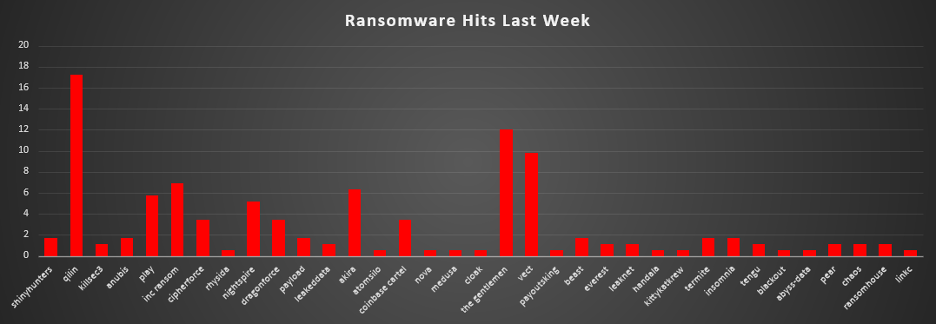
The Red Piranha Team conducts ongoing surveillance of the dark web and other channels to identify global organisations impacted by ransomware attacks. In the past week, our monitoring revealed multiple ransomware incidents across diverse threat groups, underscoring the persistent and widespread nature of these cyber risks. Presented below is a detailed breakdown of ransomware group activities during this period. Ransomware Hits Last WeekQilin led this week’s activity, accounting for 17.24% of all reported incidents. That placed it clearly at the top of the ecosystem, reflecting a sustained campaign tempo and consistent victim disclosures. A strong second tier was formed by The Gentlemen (12.07%) and Vect (9.77%), followed by Inc Ransom (6.9%), Akira (6.32%), and Play (5.75%). Together, this cluster represented a substantial share of total weekly activity, showing that multiple established crews were operating on a meaningful scale rather than a single group dominating outright. A solid mid-tier band included Nightspire (5.17%), and a group at 3.45% each CipherForce, DragonForce, and Coinbase Cartel. These actors maintained steady publishing rhythms, contributing materially to overall pressure across industries and regions. Below that, a broad lower-mid segment consisting of ShinyHunters, Anubis, Payload, Beast, Termite, and Insomnia (each 1.72%), alongside KillSec3, LeakedData, Everest, Leaknet, Tengu, Pear, Chaos, and RansomHouse (each 1.15%). While individually modest, collectively represent a diversified layer of active extortion operations. At the long tail, a series of fringe operators Rhysida, AtomSilo, Nova, Medusa, Cloak, PayoutsKing, Handala, KittyKatKrew, Blackout, Abyss-data, and Linkc (each 0.57%) appeared in small volumes. Individually minor but collectively persistent, this tail highlights the continued fragmentation and churn within the ransomware ecosystem, where numerous smaller crews remain active even when larger brands capture the bulk of headlines. |
CipherForce Ransomware
CipherForce is a newly observed doubleextortion ransomware group that began publishing victims around 23 February 2026 and operates a Torhosted leak site at o3ydbkayttkyg4iw2nc732jxmmex25bjeyqyvuuyngnxmpehdefjr3qd.onion. It is operated by TeamPCP a cloud-native cybercrime collective, active since late 2025.
Key Group Attributes:
- First public presence: 23 February 2026
- Operating model: Double-extortion (data exfiltration + ransomware)
- Actively recruiting affiliates as of reporting period
- Self-linked to prior activity as TeamPCP and Shellforce
- DLS is intermittently offline - unstable, low uptime (~14% over 30 days)

- Negotiation contact via Session messenger (encrypted)
Tactics, Techniques & Procedures (TTPs)
No independent technical analysis has been published by any victim. The TTPs below are limited to what is directly observable from DLS posts and group communications.
|
Observable Behaviour
|
Evidence / Source
|
|
Double extortion model
|
DLS posts threaten data leak AND destruction of decryption keys if ransom not paid.
|
|
Data exfiltration prior to encryption
|
Victim data previewed/published on DLS before ransom deadline
|
|
Data available for download (with password)
|
Archive password @shellforce used.
|
|
Ransom deadline imposed
|
1-week payment deadline stated explicitly in DLS post
|
|
Affiliate recruitment
|
DLS self-description states group is actively seeking affiliates
|
No validated technical attribution exists to map to MITRE ATT&CK framework. Including speculative mappings would be misleading.
Indicators Of Compromise (IoCs)
|
Type
|
Value
|
|
Full URL
|
http://o3ydbkayttkyg4iw2nc732jxmmex25bjeyqyvuuyngnxmpehdefjr3qd.onion/
|

IP / Web Panel
|
Type
|
Value
|
|
Web Panel URL
|
http://185.141.216.76:5000/
|
|
Login Page
|
http://185.141.216.76:8000/login
|

Communication Channels
|
Platform
|
Value / Handle
|
|
Session ID
|
05a04c7c548c39e903c5913973dd55b6f3d9c1a10d346ca9d49d10b9428095823e
|
|
Telegram
|
https://t.me/team_pcp
|
|
Telegram
|
https://t.me/Persy_PCP
|
|
Telegram
|
https://t.me/+fQrXQuy77Ng2YzBh
|
|
Telegram Bot
|
https://t.me/fbi_open_door_911_Bot
|
Ransomware Victims by Geography
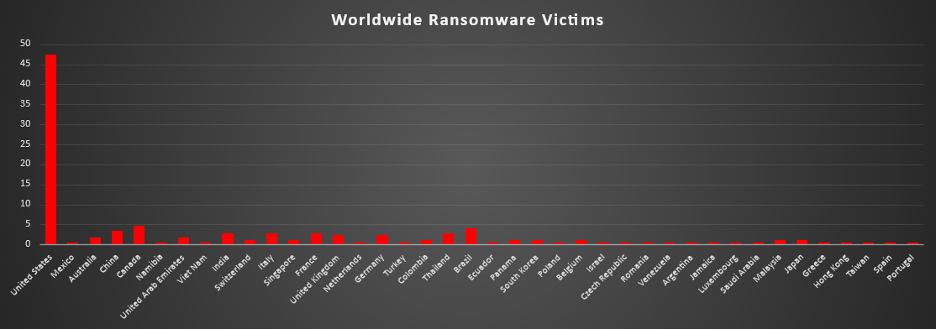
The United States remained the dominant ransomware target, accounting for 47.4% of all identified victims. Nearly one in two recorded incidents hit US-based organisations, keeping it firmly at the center of global ransomware activity.
A clear second tier consisted of Canada (4.62%), Brazil (4.05%), and China (3.47%), followed by India, Italy, France, and Thailand (each 2.89%). These countries represent the bulk of non-US activity, reflecting large digital economies, broad enterprise footprints, and high-value organisational targets.
A mid-band followed with United Kingdom and Germany (each 2.31%), and a cluster at 1.73% Australia and United Arab Emirates. Several countries contributed 1.16% each, including Switzerland, Singapore, Colombia, Panama, South Korea, Belgium, Malaysia, and Japan. This layer shows ransomware activity is consistently distributed across North America, Europe, the Middle East, and Asia Pacific.
Below that sits a long tail of single-incident geographies, Mexico, Namibia, Viet Nam, Netherlands, Turkey, Ecuador, Poland, Israel, Czech Republic, Romania, Venezuela, Argentina, Jamaica, Luxembourg, Saudi Arabia, Greece, Hong Kong, Taiwan, Spain, Portugal (each 0.58%). Individually small, but collectively wide-ranging, this distribution reinforces the same structural pattern seen week after week, ransomware is not regionally contained it is globally dispersed, with b
Industry-wide Ransomware Impact
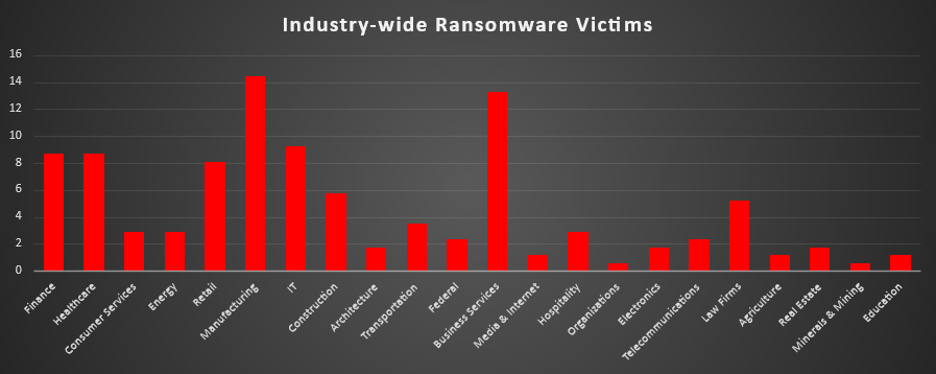
Manufacturing led all sectors, accounting for 14.45% (25 incidents) of total ransomware activity. Business Services followed closely at 13.29% (23 incidents), reinforcing the continued targeting of service-layer organisations that often provide access to multiple downstream clients.
IT ranked third at 9.25% (16 incidents), underscoring the ongoing strategic value of technology providers as high-leverage targets. Finance and Healthcare were tied at 8.67% (15 incidents each), maintaining their consistent presence due to sensitive data holdings and operational criticality. Retail was close behind at 8.09% (14 incidents).
Mid-tier exposure included Construction (5.78%), Law Firms (5.2%), and Transportation (3.47%). These sectors typically hold contractual, infrastructure, or regulatory-sensitive data, making them opportunistic but valuable targets.
Lower-frequency sectors included Energy and Hospitality (each 2.89%), Federal and Telecommunications (each 2.31%), and smaller shares across Architecture, Electronics, Real Estate, Agriculture, Education, Media & Internet, Minerals & Mining, Organisations, and Consumer Services (each under 2% individually).
Ransomware actors continue concentrating on operationally critical and supply-chain-connected industries in Manufacturing, Business Services, IT, Finance, and Healthcare while maintaining broad diversification across nearly every economic sector.